Invoicing & Payment Collection
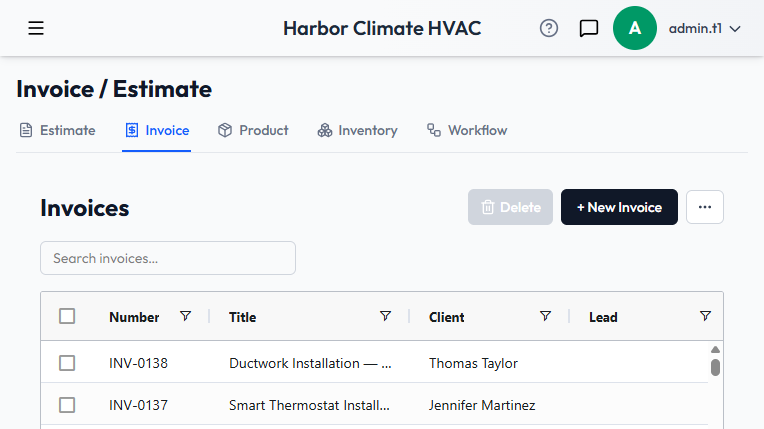
The Invoices grid
Columns: Number, Title, Lead, Client, Status, Total, Balance Due, Issue Date (newest first by default), Due Date, and Assigned To. Same search, bulk-delete, and saved-column behavior as Estimates. There's no per-row "Convert" action here — invoices are the destination of that workflow, not the source (see Creating and Sending Estimates).
Creating an invoice
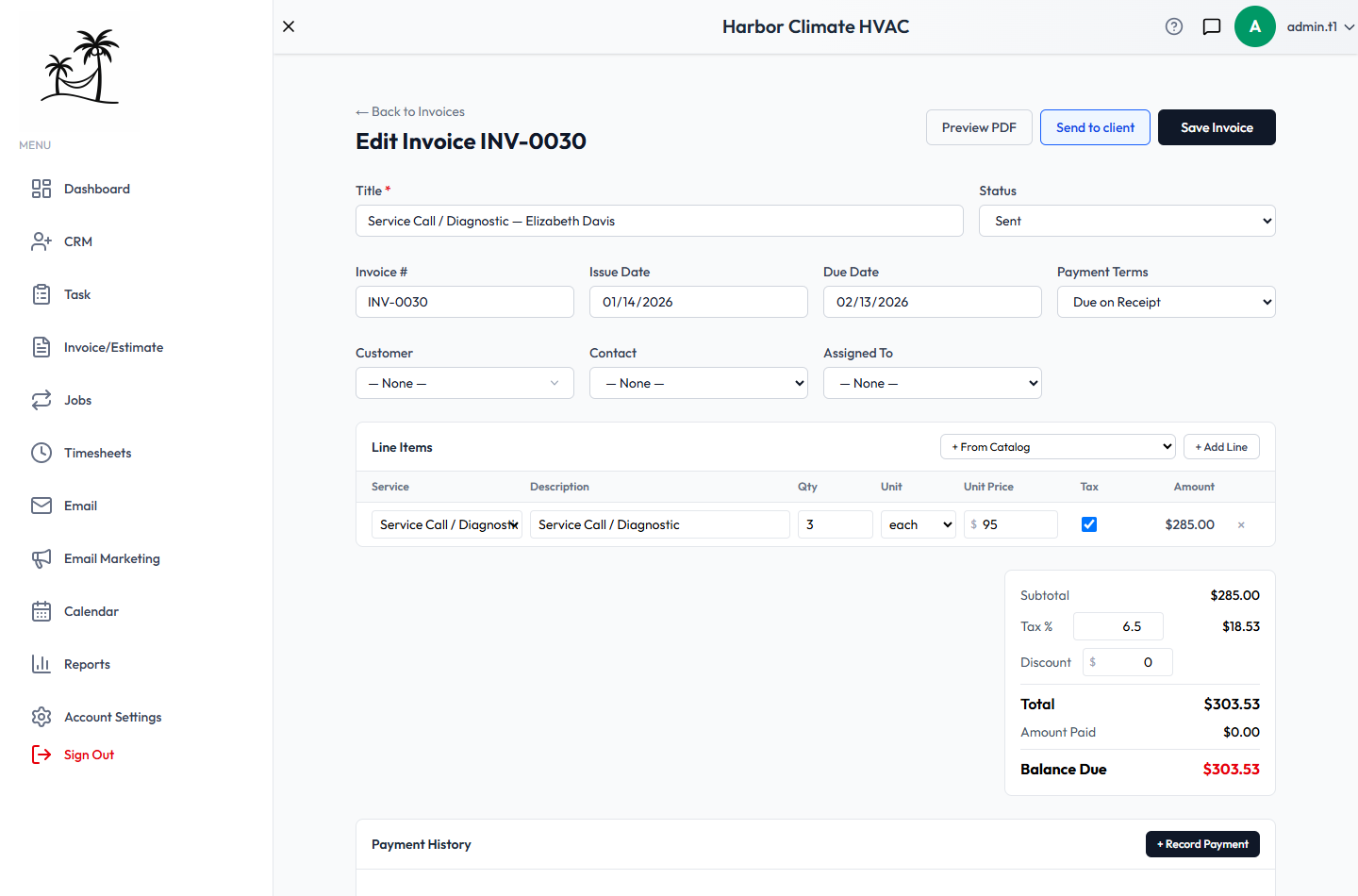
Same required Title field and line-item/catalog/tax/discount behavior as estimates.
- Status options are Draft, Sent, Paid, Partial, Overdue, and Void.
- Payment Terms — Due on Receipt, Net 15, Net 30, or Net 45/60.
- If the invoice came from a converted estimate, a note shows which estimate number it came from.
- Below the totals, invoices show Amount Paid and Balance Due, calculated automatically from recorded payments.
Getting paid online
On Business and Growth plans, customers can pay an invoice by card directly through the customer portal — no phone call, no manual payment entry required on your end. Payment goes through your own connected payment account. Draft invoices are never shown in the portal, only invoices you've actually sent.
Recording a payment yourself
You can also log a payment manually — useful for checks, cash, or anything paid outside the portal:
- Open an existing invoice and use Record Payment: date, amount, method (check, cash, credit card, bank transfer, or other), a reference number, and notes.
- Every payment is listed in a running Payment History table, and any payment can be deleted if entered by mistake.
- Partial payments are fully supported — add as many payment rows as needed, and Balance Due updates automatically after each one.
Sending and PDFs
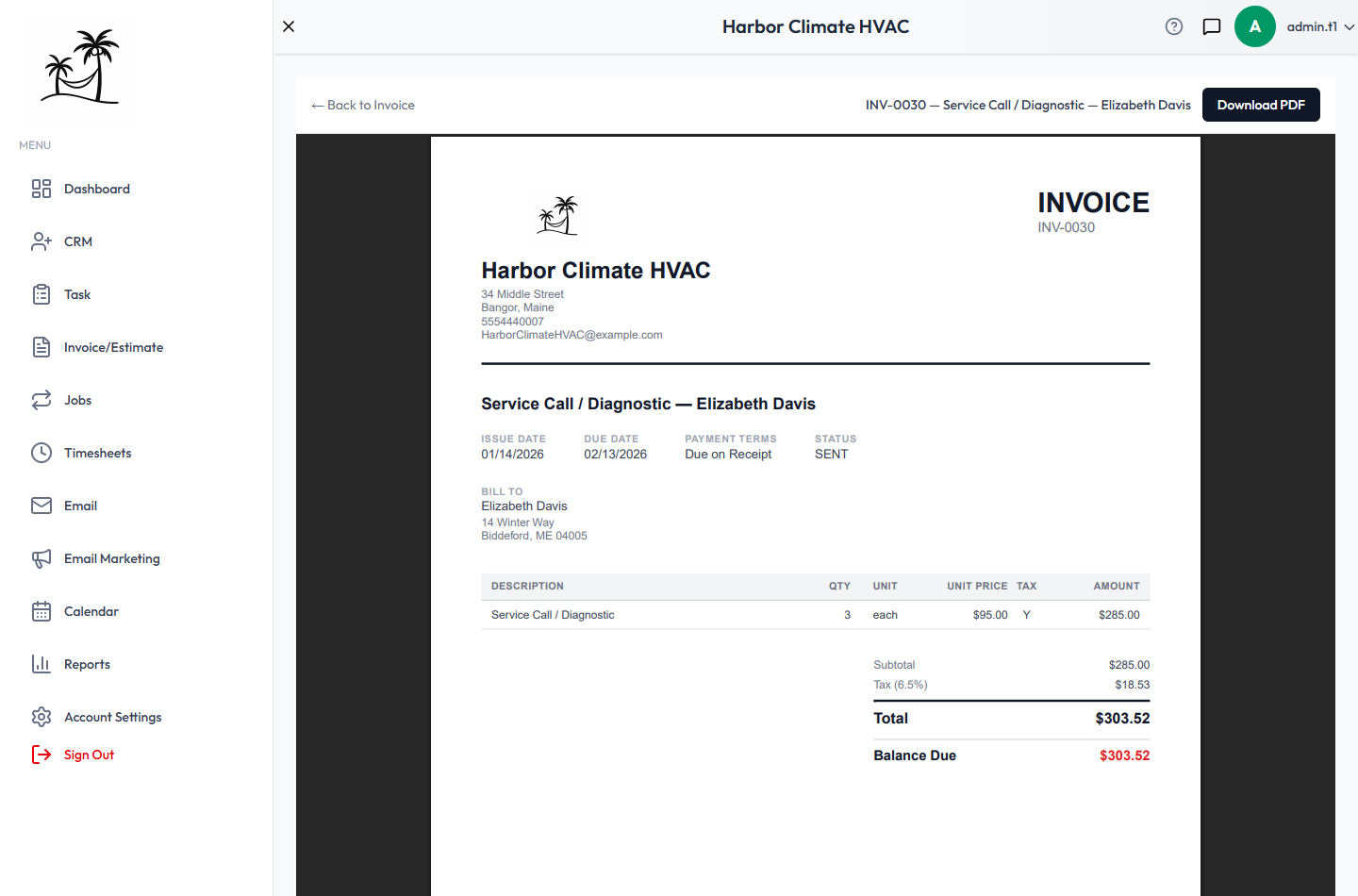
Preview PDF generates a branded PDF including your logo. Send to client emails the invoice directly from the editor.
Tips
- Double-check the due date and payment terms right after converting an estimate — they reset to Net 30 and won't carry over.
- Use Internal Notes on the estimate for anything you don't want a client to see, since PDFs only ever show the public Notes field.
- If a customer pays online through the portal, the payment and balance update automatically — you don't also need to record it manually.